

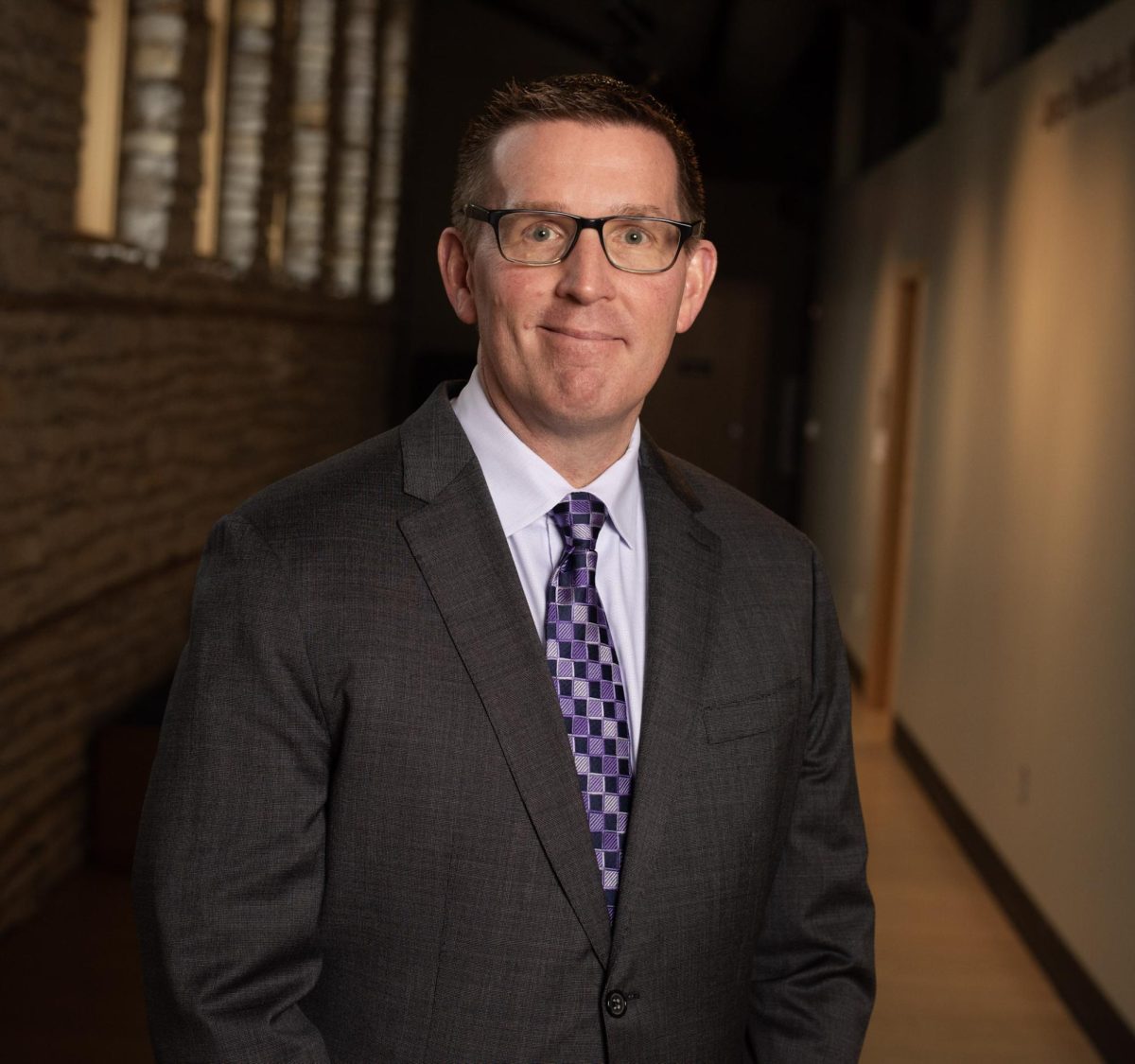
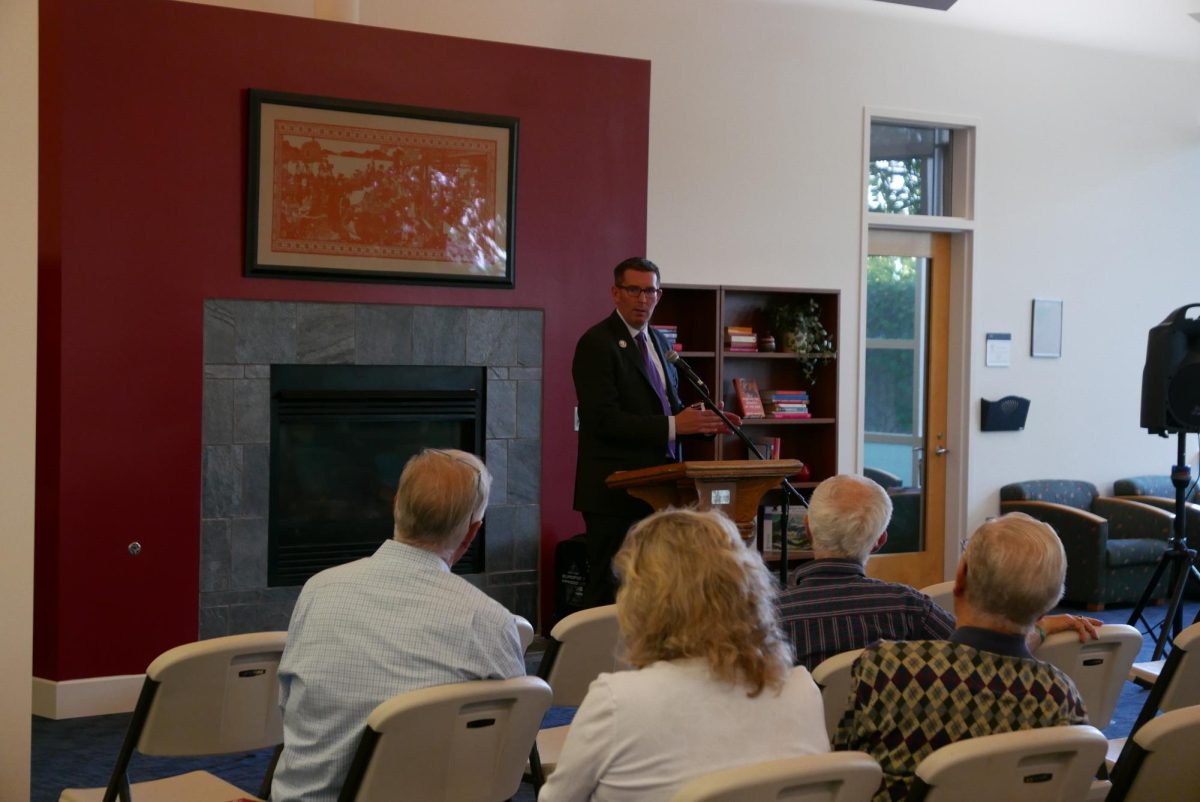
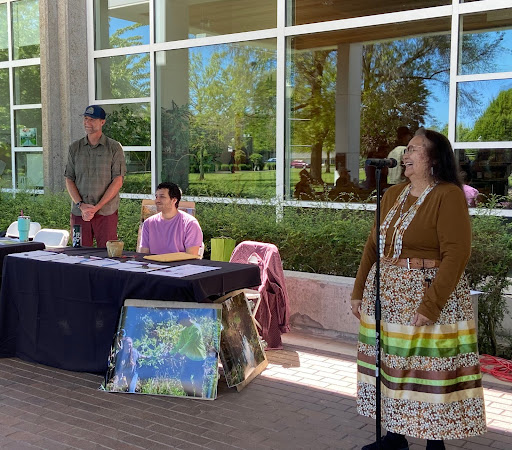
Makerusa “Mak” Porotesano recently challenged students to rethink what sacred space means within higher education. Through his presentation, “Creating VĀSĀ: Reimagining the Creation of Sacred Spaces in Higher Education,” Porotesano explored how colleges and universities often fail to support Pacific Islander students beyond stereotypes and surface-level representation.
Ironically, only three students attended the presentation, reflecting the very issue Porotesano discussed throughout the event: the continued underrepresentation of Pacific Islander voices within higher education. The event itself was not widely advertised, overshadowed by the president’s dinner that was the same night, making its small turnout feel symbolic of how conversations surrounding Native Hawaiian and Pacific Islander (NHPI) identity and support are often overlooked on college campuses.
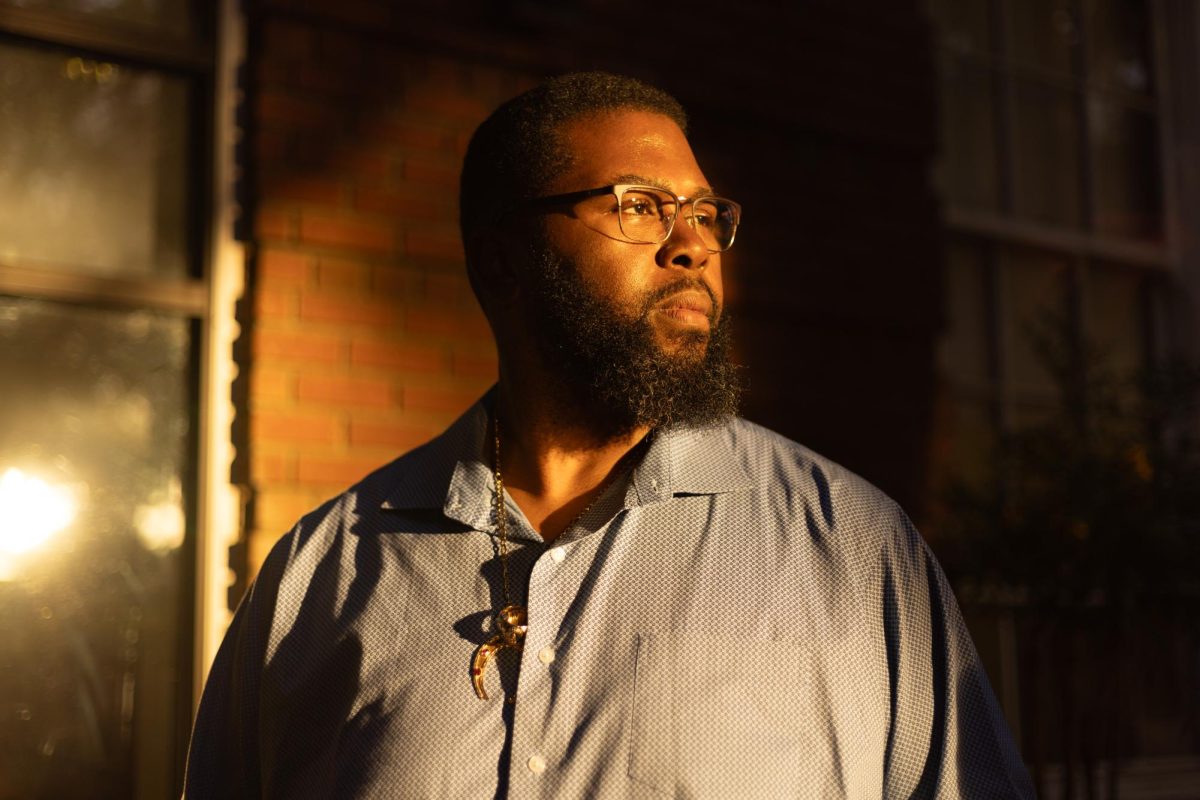
Porotesano currently serves as Director of Multicultural Services at Portland Community College, where he works to support students from diverse cultural backgrounds through advocacy, programming, and equity-focused initiatives. Alongside his role in higher education, Porotesano has built a long history of leadership in Pacific Islander organizing, student advocacy, and climate justice work.
He has served as a delegate to COP26; the United Nations climate summit focused on global climate policy, where he represented Pacific Islander perspectives in international discussions on climate change. His work has also included collaboration with the University of the South Pacific, a major regional institution serving Pacific Island nations, connecting his advocacy to education systems across the Pacific.
In Portland, Porotesano helped found both the Pacific Islander Student Alliance (PISA) and Pacific Climate Warriors PDX. Through these roles, Porotesano’s work has centered on creating spaces for Pacific Islander students to feel supported, represented, and empowered in higher education while also connecting local student organizing to broader issues such as climate justice and global advocacy.
Central to his presentation was the concept of VĀSĀ. He explained that “VĀ” refers to the relational space between people, communities, ancestors, and land, while “SĀ” refers to something sacred. Together, VĀSĀ represents the sacred relational spaces that connect individuals to one another.
Rather than viewing schools simply as academic institutions, Porotesano encouraged students to think about campuses as spaces shaped by relationships. In this framework, creating sacred space means creating environments where Pacific Islander students feel seen and valued, and can be supported beyond token representation.
One of the strongest themes in the presentation was the underrepresentation of Pacific Islanders within higher education. Porotesano discussed how Pacific Islanders are frequently grouped into broader Asian Pacific Islander categories, which can erase the unique experiences and needs of NHPI communities. According to him, this grouping often results in fewer programs, less funding, and limited visibility for Pacific Islanders.
Porotesano even discussed how the language used to describe the Pacific Island regions reflects colonial perspectives. Terms such as “Melanesia,” meaning “black islands,” and “Micronesia,” meaning “small islands,” were created by European outsiders rather than Pacific Islanders themselves. These labels reduce diverse cultures and nations into simplified racial or geographic categories shaped through colonial viewpoints.
The discussion highlighted how colonial systems continue to influence not only education and representation, but also the very ways Pacific Island identities have historically been defined and understood.
He also explained that representation itself has often been limited or inaccurate. Many NHPI-related clubs were historically led by non-Pacific Islanders or represented only one region of the Pacific, or primarily Hawaiian students. At the same time, when represented, colleges often reinforced stereotypes by recognizing Pacific Islanders mainly through athletics, dancing, or entertainment rather than as scholars, academics, leaders, or activists.
Seeing these issues firsthand, Porotesano helped take action by founding the Pacific Islander Student Alliance (PISA) in 2007 alongside students from Portland State University, Oregon State University, the University of Portland, Mt. Hood Community College, and Eastern Oregon University.
PISA is a student-led organization created to address the lack of Pacific Islander representation, curriculum, and leadership opportunities in higher education. The organization focuses on building community for Pacific Islander students, supporting academic success, and developing leadership through campus organizing and cultural connection.
Over time, PISA has expanded across multiple colleges and universities in Oregon, Washington, California, and Hawai‘i, bringing together students through conferences, leadership programs, and volunteer work.
He described PISA’s development in phases, beginning with student leadership and organizing before evolving into a broader professional and managerial movement over nearly twenty years.
The organization, “wasn’t built in a day,” said Porotesano emphasizing that community advocacy requires patience and collective effort.
During the presentation, Porotesano also noted that he once tried to bring his organization to Linfield University, but the effort was ultimately rejected. That moment reflected a broader challenge in higher education, where institutions may promote diversity publicly while still limiting initiatives that expand cultural representation and student-led programming.
Despite discussing serious issues, the event also felt very welcoming and communal. Porotesano provided food for attendees, which became part of a lighthearted conversation about how many Native and Pacific Islander cultures express care and connection through sharing meals. That moment reflected the larger message of the presentation itself: sacred spaces are not only created through policy or programs, but through relationships and genuine community.
Discussions surrounding Pacific Islander identity, representation, and belonging are still frequently marginalized within higher education spaces. Ultimately, Porotesano’s presentation demonstrated that creating meaningful change in higher education requires more than symbolic diversity efforts or occasional cultural recognition. Porotesano reminded students and educators that representation is not simply about visibility, but about creating environments where people feel respected, supported, and truly connected to their communities.



Makerusa Porotesano • Jun 18, 2026 at 9:13 am
Thank you so much for this story. It was an honor to meet you and share my work. We’ll try again to bring the message to Linfield. Continue the great work and congratulations on the article