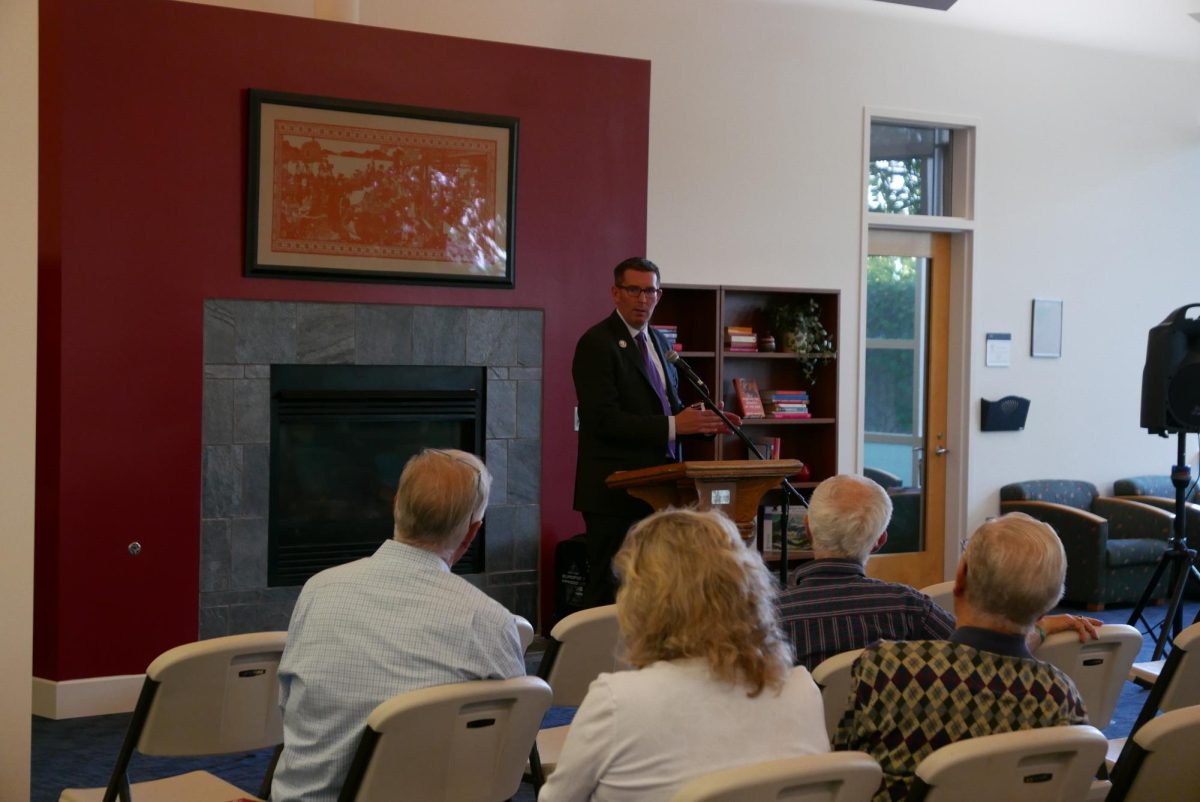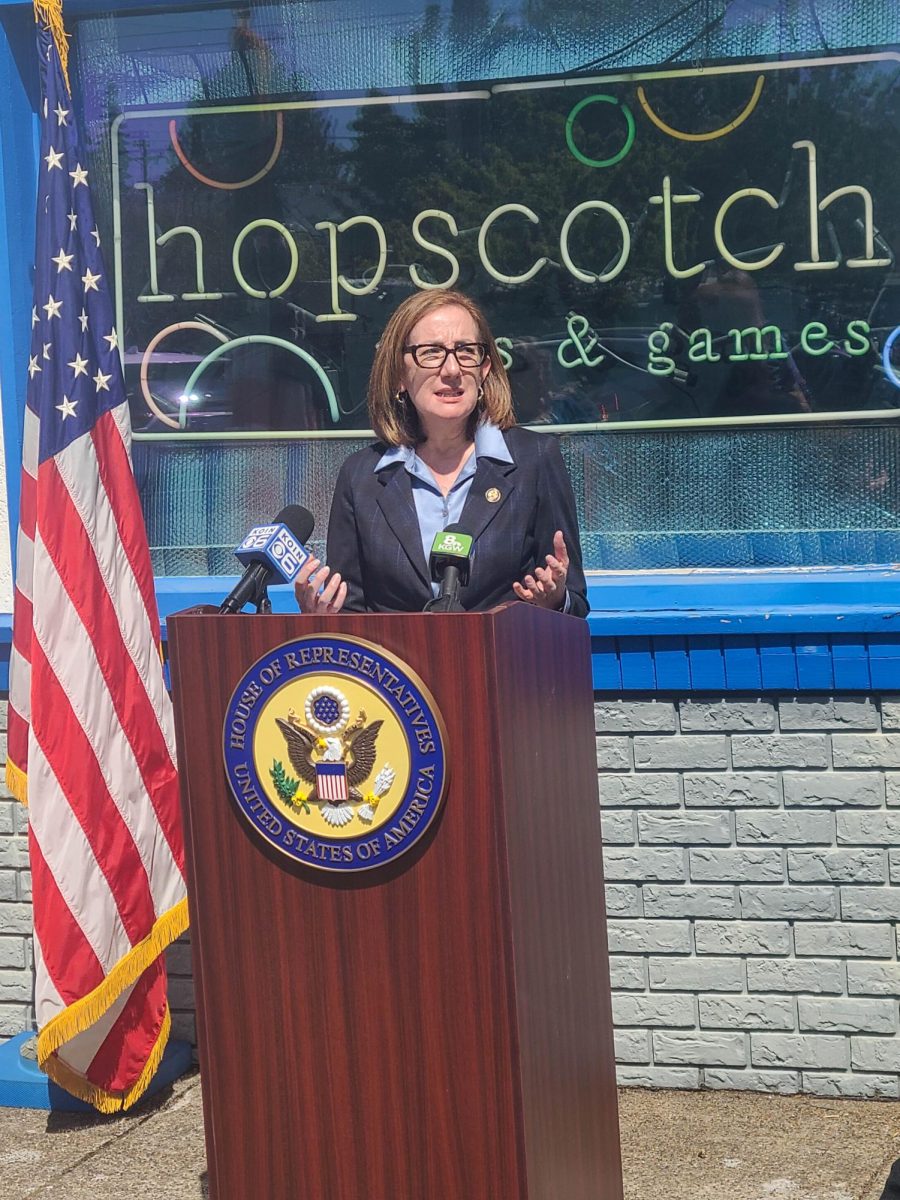
On May 24, Oregon State Representative Andrea Salinas visited three McMinnville small businesses: Velvet Monkey, Entwined and Hopscotch. She spoke with the business owners of each to discern the effect of President Trump’s recent tariffs. She followed this with a press conference hosted behind Hopscotch where the business owners were able to publicly voice their struggles and concerns. This visit is part of Salinas’ effort to create Bills in Congress that will support small businesses through the tariffs.
”These tariffs under IEEPA [International Emergency Economic Powers Act] are illegal,” said Salinas, referencing Learning Resources vs. Trump the Supreme Court Case decision to make the tariffs invalid, but much of the damage has already been done, as McMinnville local businesses feel the strain.
The IEEPA was the law that Trump used to implement his “Liberation Day” tariffs last year, among others. The Supreme Court ruled those tariffs unconstitutional in February.
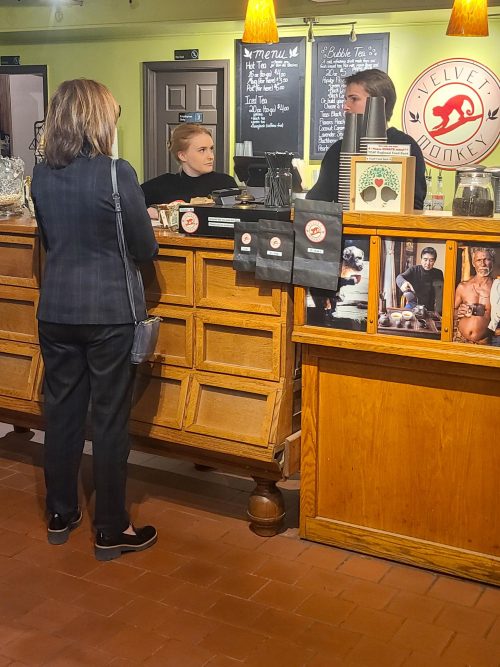
Married couple, Richard and Serengeti Savage have owned and operated Velvet Monkey Tea Shop since 2021, and were considering expanding. They wanted to hire employees and become importers. However due to the implementation of the tariffs, one of their biggest suppliers went out of business. Their variety of teas has gone now from 130 to 70.
“We had a whole business plan…there’s no use in even reworking it,” said S. Savage, “how do you invest in a market that won’t look the same tomorrow.”
Trump’s tariffs have been inconsistent, made worse by the recent oil crisis. For Entwined Yarns this has meant fluctuations in their pricing, with almost identical products costing vastly different because of origin or time of purchase.
Entwined Co-Owner, Lia Harris said, “There have been four distinct jumps in pricing. You have to decide how much of that markup you eat.”
Harris refers to accepting deficits in order to reduce cost increases and the effect of tariffs on the customer. For the Savages this has meant reducing the already less than minimum wage that they pay themselves. But there is only so much the owners can do. Inevitably the prices have to increase to stay in business.
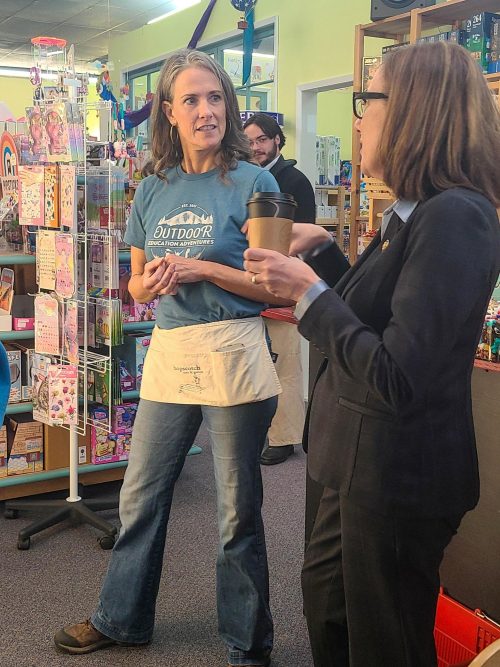
Hopscotch Toys owner, Linda Hayes said, “The increases have been really dramatic, and by the time they reach the consumer, my families are paying more for less.”
Businesses where many of their goods (or the materials to make them) are imported from China, like Hopscotch Toys, have been some of the hardest hit. Tariffs on Chinese goods have been volatile as the two countries are in the midst of a trade war, raising the economic burden on the store and its consumers.
These costs are not going away, and the new tariff rebate that is intended to relieve some of the economic pressures of importing is not always viable for small businesses since they are not importing the goods themselves. It is instead the big manufacturers that benefit, places like Walmart or Amazon.