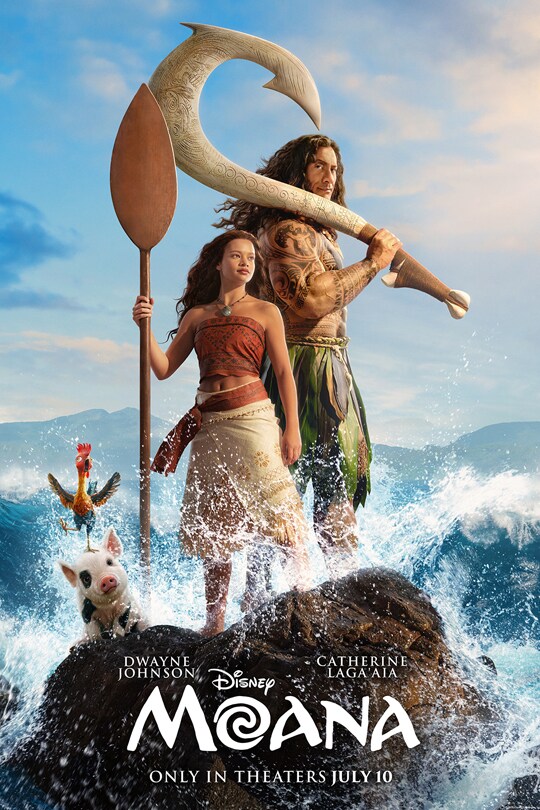
March 23, 2026, Disney released its first full length trailer for the live action adaption of “Moana.” The animated “Moana” came out a little under a decade ago and its sequel “Moana 2” a little under two years ago; both films combined at the box office have grossed just shy of two billion dollars. “Moana” has an impressive 95% critic rating on Rotten Tomatoes and 89% audience rating, while “Moana 2” boasts a 60% critic rating and an 85% audience rating.
All of that is to say these are popular and well liked films, so it stands to reason, Disney would want to further capitalize on that success in a way they’ve been doing for the last decade: live action remakes of a classic animated film. Though, is a film from barely a decade ago a classic?
Film is the intersection between art and commerce. No major motion picture studio puts up hundreds of millions of dollars to produce a film if they didn’t expect to double or even triple that money in profits. Studios are businesses at the end of the day, and businesses mind their bottom lines––why take a risk on something new when you can reheat some old property or capitalize on nostalgia? On paper it’s all very practical, very cut and dry.
Remakes are nothing new to the film industry. Spin-offs are nothing new. Sequels are nothing new, and yet there’s something particular off-putting about live action remakes of animated films. I watched the newest trailer for “Moana” (2026) and it looked ugly. All of the color has been sapped from the film in favor of a morbid realism that turns the cute and quirky into strange approximations of reality. From what’s in the trailer as well, the plot appears nearly identical with little deviation and change. Each shot and frame from the trailer looked like a worse, cheaper version of the original film it’s remaking.
The only returning cast member is Dwayne Johnson who plays the demi-god Maui. Johnson’s hair in the trailer looks like he threw on a Dollar Tree wig. He looks unbelievably out of place and just as flat and grey as everything else in the trailer.
If it looks so bad, why is Disney making it? Money, that’s it. It’s frustrating as someone who loves movies, but it’s the truth. This remake, like all the other ones Disney’s produced, will strip the whimsy and charm out of the original in favor of some attempt at verisimilitude, resulting in an uncanny and repulsive look.
Largely, these live action remakes add nothing new or improve on the source material. They’re such blatant cash grabs devoid of any real soul. Animation is not bound by reality, it’s limitless in the kinds of worlds that can be imagined and creatures or characters conceived. Animation is a unique art––it’s a form that is the antithesis to homogeneity. Whether intentional or not, there’s this sense of smugness involved in these remakes, as if now they’re being leveled up to a form that’s taken more seriously.
Shoving animation into live action contorts the beauty and transforms it into something less than, not greater. Animation’s essence is lost when it’s transposed because it was originally imagined in a strictly animated context. High quality animation doesn’t age itself, it remains as vibrant as the day it was released.
Each announcement of a new live action remake irritates me more and more; watching the trailer for this movie sent me over the edge because of just how recent the last “Moana” came out. I had similar frustrations to the “How to Train Your Dragon” film released just last year. Adaptations are one thing, moving from book to TV show, or comic book to animation; there’s a consideration and attention to how the media will change in the adaptation. None of that grace is ostensibly given to these live action remakes. Instead, the focus is placed on how “real” the movie can look.
I hope we’re in the last gasps of this trend and that audiences will reject these kinds of projects. Money is all studios listen to. So, if these films make less and less money, the less likely we are to see another one. I quite enjoy the original “Moana,” but I will not be watching or reviewing this “new” version.