Traveling abroad is an eye-opening experience for many, whether it’s from experiencing a new culture, new food or a new language, but many also find something familiar when studying abroad.
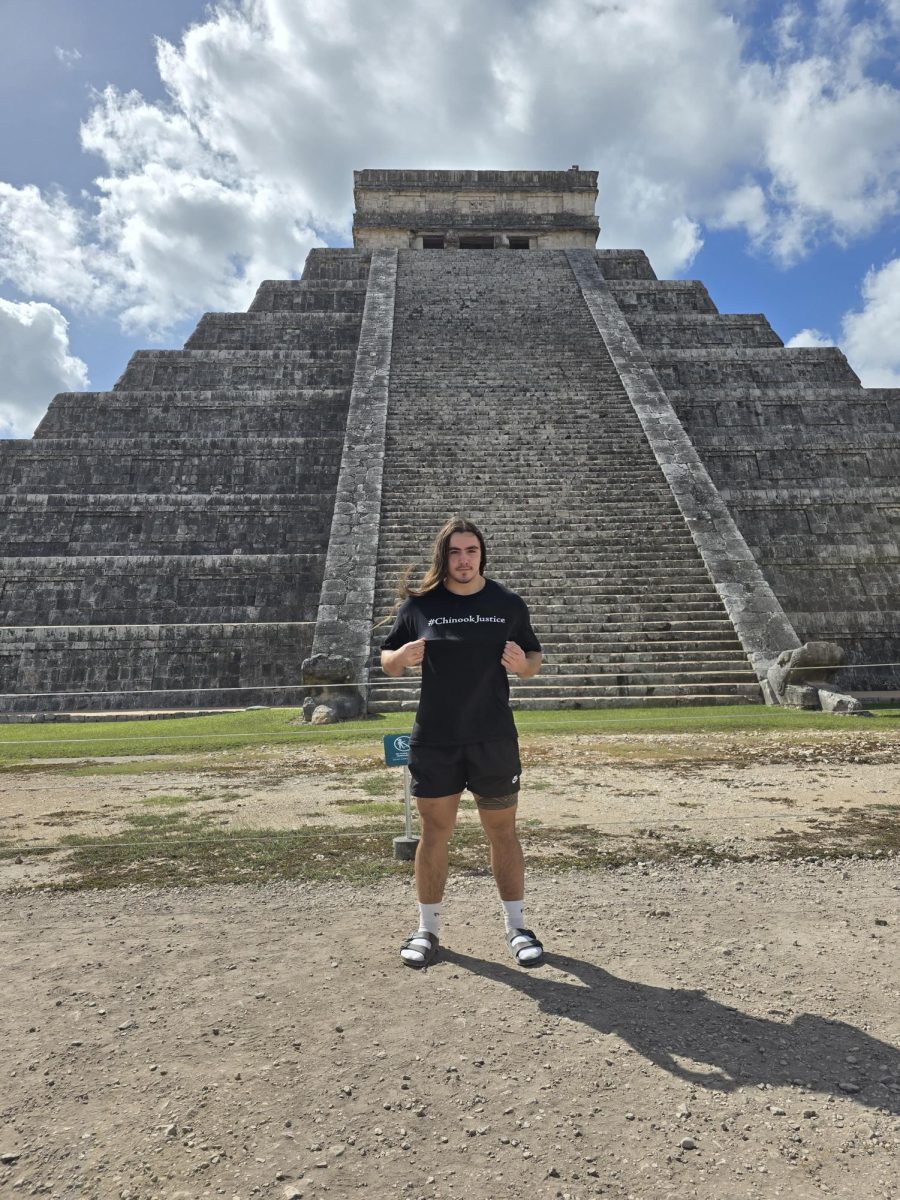
Ferrill Johnson, sophomore and anthropology major, went to Yúcatan, Mexico for the January Term course “Indigenous History and Culture in the Yucatan.”
He was drawn to the course for both academic and personal reasons. On the academic side, he figured the historical elements of the class would connect well to his anthropology background. The Yúcatan is a hotbed for archaeological study, with sites like Chichen Itza and other temples and cities that are still waiting to be fully restored. These sites made a huge impact on him.
“It was amazing in terms of just being in places like that that are so impactful for their indigenous people,” Johnson said. “I’ve never witnessed something like that, pictures don’t do any of it justice, so when you’re actually there, [experiencing] the grand scale, I was just awestruck by everything.”
On the personal side, his indigenous roots also drew him to the class. He belongs to the Chinook nation, primarily located in northwestern Oregon. During the course of Jan Term, he found himself drawing connections between what he learned about the indigenous peoples in the Yúcatan and his own cultural heritage.
“I feel like I had this built in appreciation for a lot of the stuff,” Johnson said. “The rituals they were doing for us were probably a little bit doctored, I’ve witnessed our equivalents to that stuff, and so, there is heavy importance in that.”
According to Johnson, there were some similarities he noticed between the Mayans and his home culture. For example, the Yúcatec Maya language sounded very similar to Chinook Wawa.
“When you go to the Seattle area, there’s hundreds of different native languages and ours sounds pretty different from all of theirs,” Johnson said. “The connection between ours and the Mayan language is just weirdly similar.”
Alongside this, he found many differences. The US has reservations for many of its indigenous people, and some are sovereign states, but the Yucatec Maya aren’t federally recognized in the same way. There are still many Yucatec Maya communities, but Johnson noticed more of an active battle towards cultural preservation in the US than in the Yúcatan.
In the future, Johnson plans to bring his own indigenous perspective into his professional life, hoping to introduce something new to the field of anthropology.
“I think I just naturally fully put myself in other people’s shoes or, I want to, and that’s the job of an anthropologist,” Johnson said. “But they don’t do it right most of the time, it is just so western, the perspective, and I want to do work in our area, so I think an indigenous perspective would be really handy.”
The Chinook people are dealing with many battles of their own, whether that’s the fight to preserve their culture, or to become federally recognized as a tribe, and Johnson has been around these battles his whole life. This Jan Term gave him an opportunity to learn, grow and eventually give back to his own community.